Bronze swords in Armenia are divided into four types (according to S. A. Esayan): swords with forked hilt, integral swords with flanged hilt (Near Eastern type), integral swords with round hilt. A special type of weapons makes a separate group called rapiers, the analogues of which were famous in the Minoan Civilization.
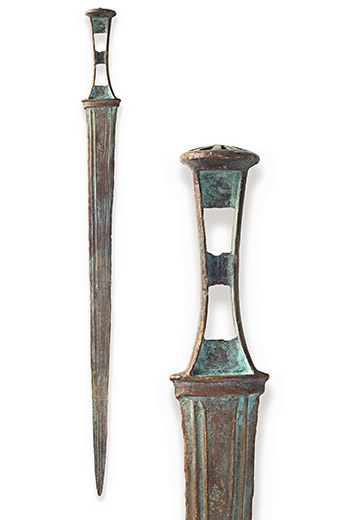
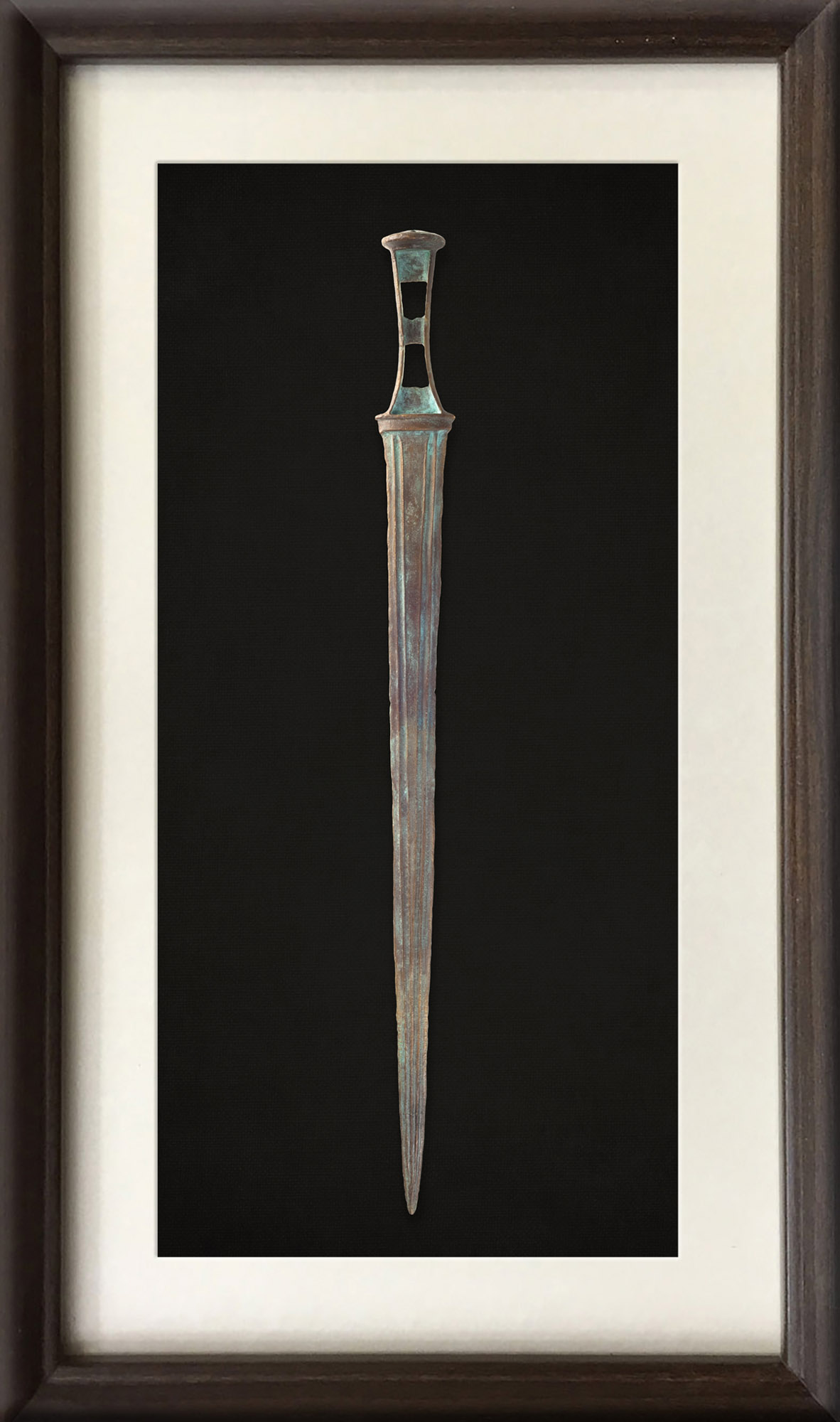
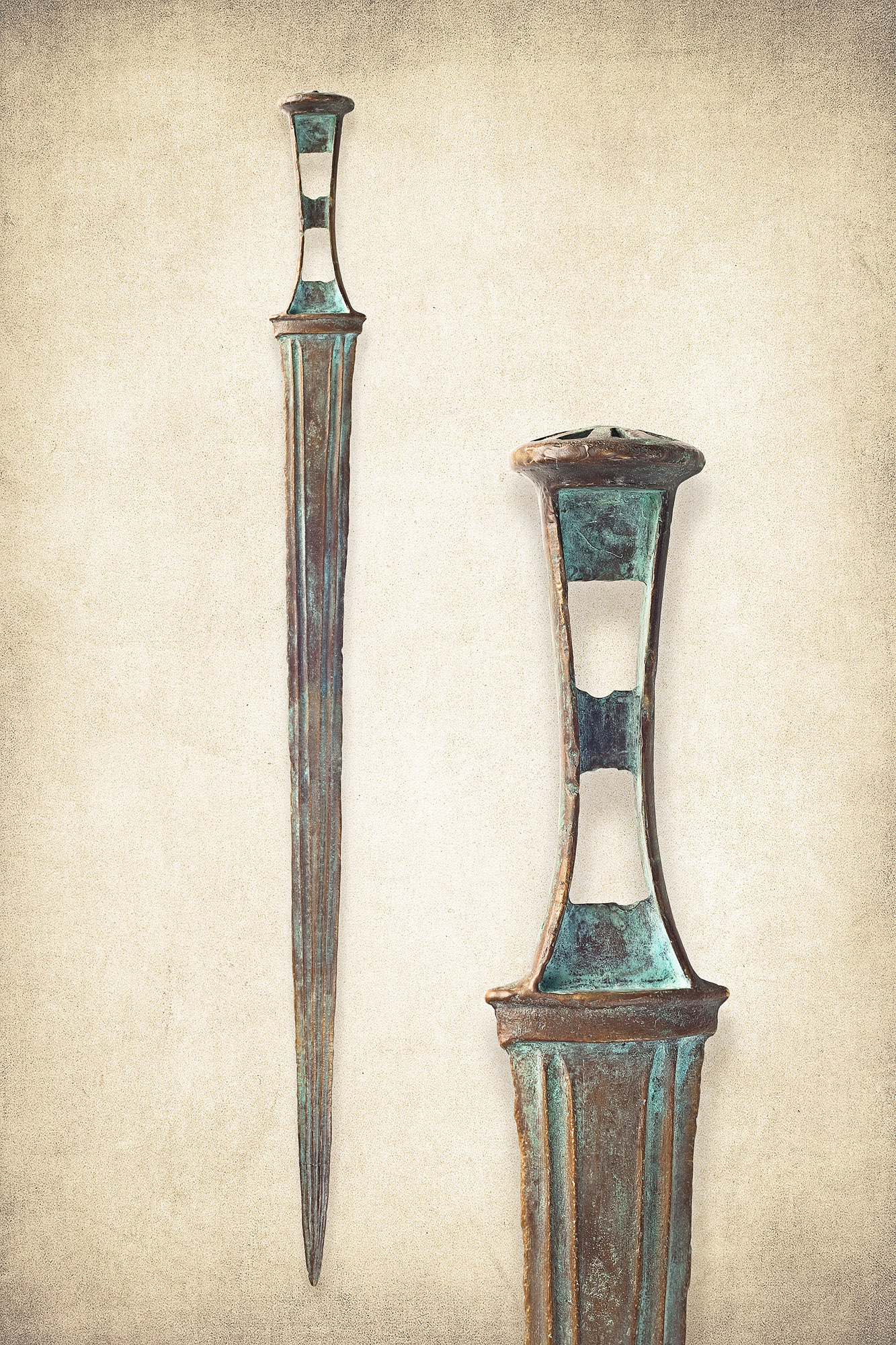
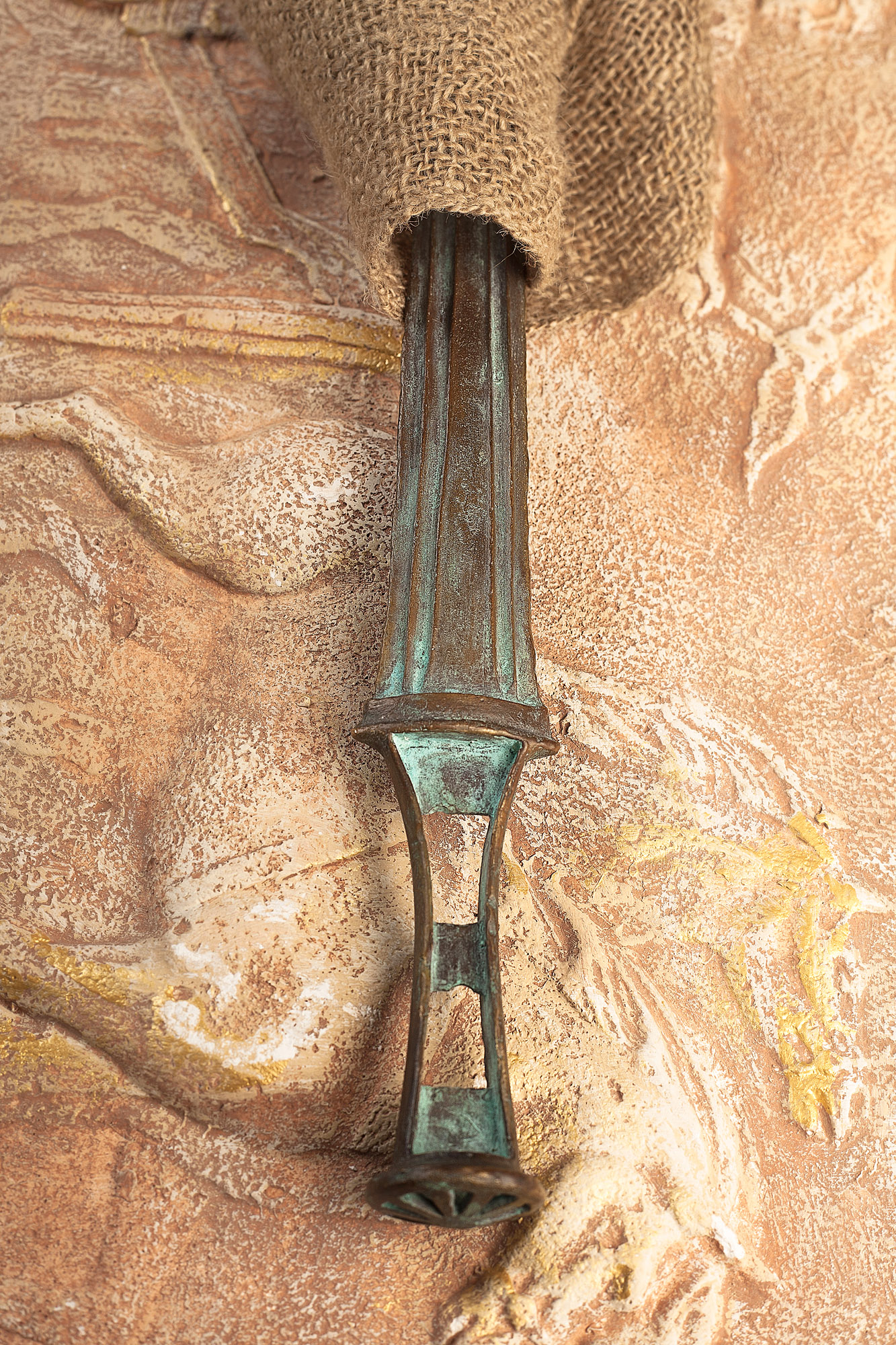
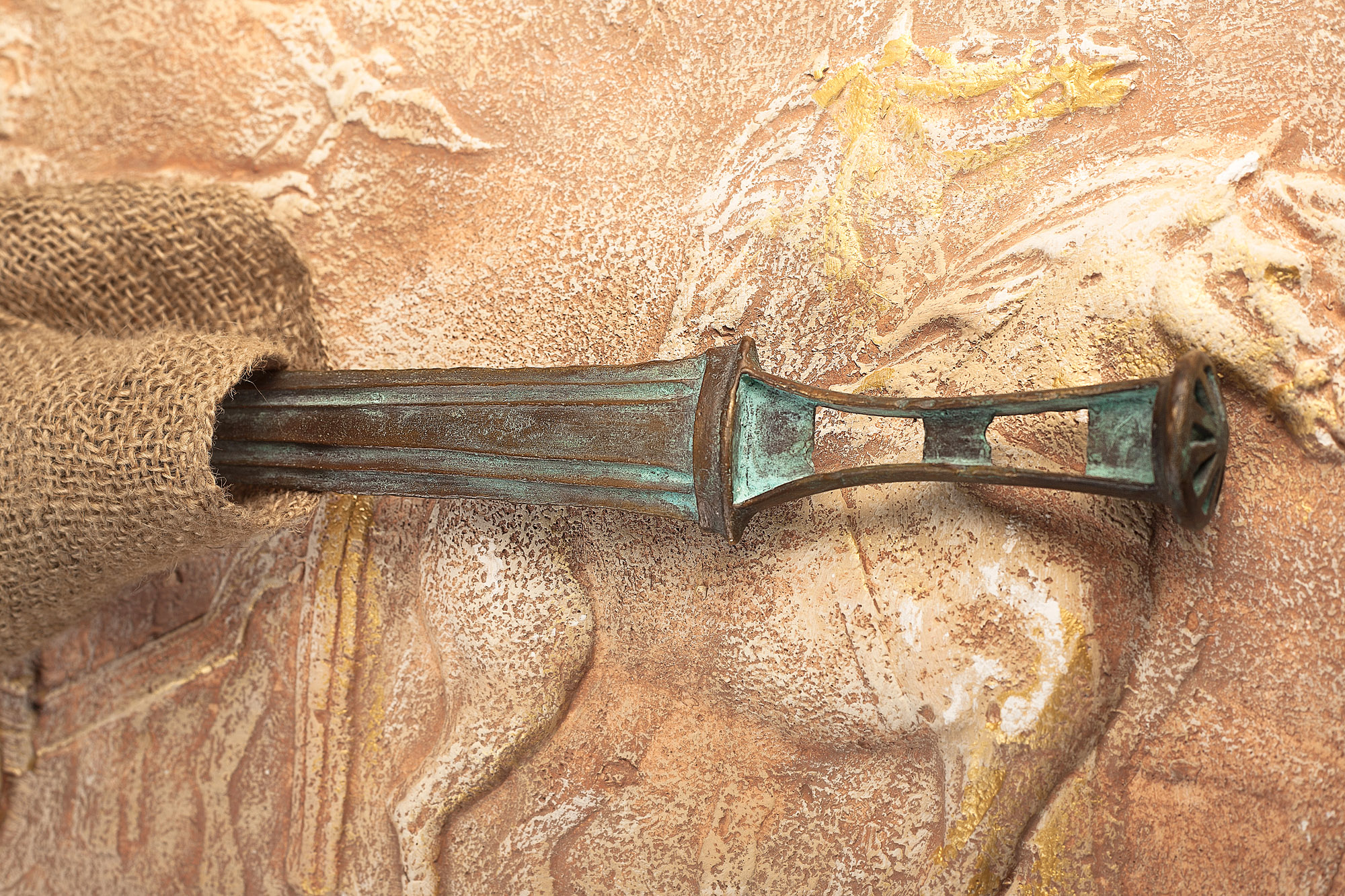
Sword TS001 belongs to the second type – swords with flanged hilt. Such type of swords have a narrow, long blade with a flat hilt, sides of which are a little raised for the backing of the plates. These swords are found during the archaeological excavations in Karmir Vank, Etchmiadzin, Alaverdi and other places of Armenia. They are from 30 cm (Karmir Vank) to 58 cm long (the described sample).
Swords and daggers of this type are divided into three subtypes with a variety of options (32 options), according to A. Piliposyan’s classification. Swords of the first subtype consist only of a hilt and a blade; swords of the second subgroup have got a hilt, a ricasso and a blade. The swords of the third subgroup have a pommel, a hilt, a blade and a ricasso. This sword belongs to the tenth version of the third subgroup in the second group of swords.
The earliest samples of swords with flanged hilt are known from Levant, and can be dated back to the beginning of the II millennium BC. Then they fell out of use in the second half of the II millennium BC. In the Armenian Highland the swords and daggers of this type spread in the middle of the II millennium BC, and some of the iron samples existed until the second quarter of the 1st millennium BC.
The Armenian Highlands is considered by the researchers as one of the main centers of production of this type of weapon. In Armenia, such swords and daggers could be found in rich burial places together with other kinds of weapons: spears, daggers, axes, maces, bows and arrows. It can be assumed that these burial places could belong to the military aristocracy.
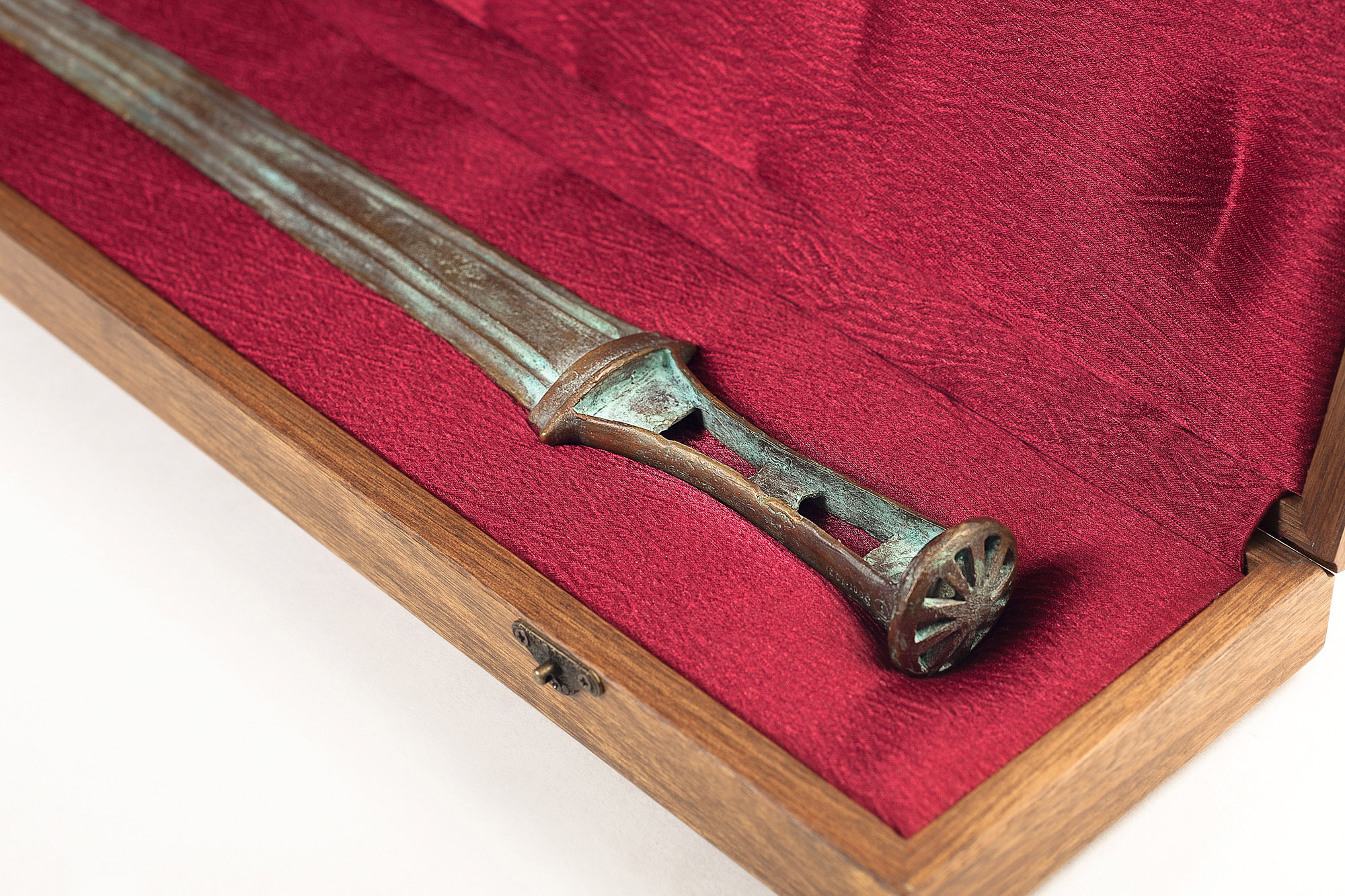
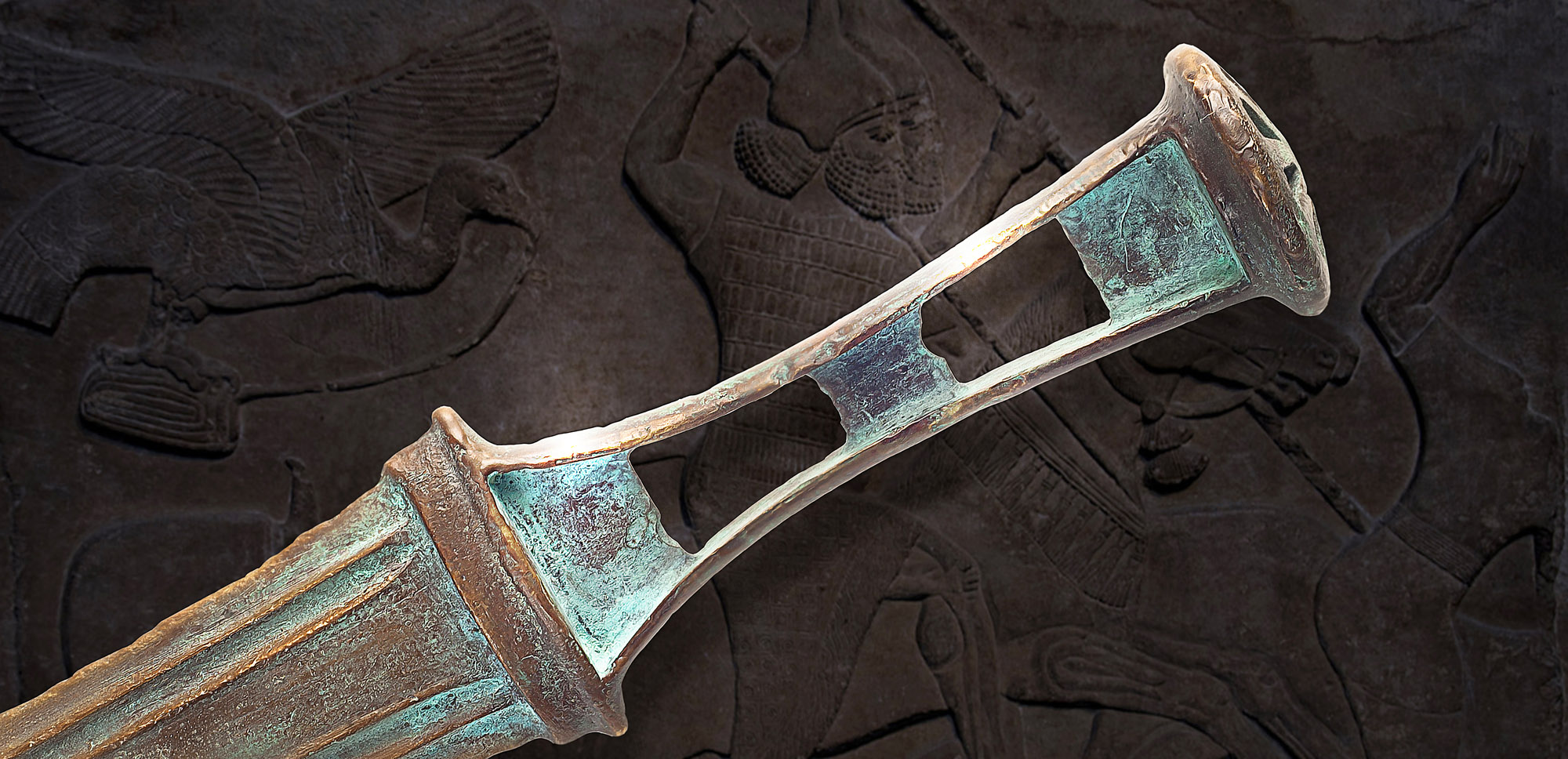
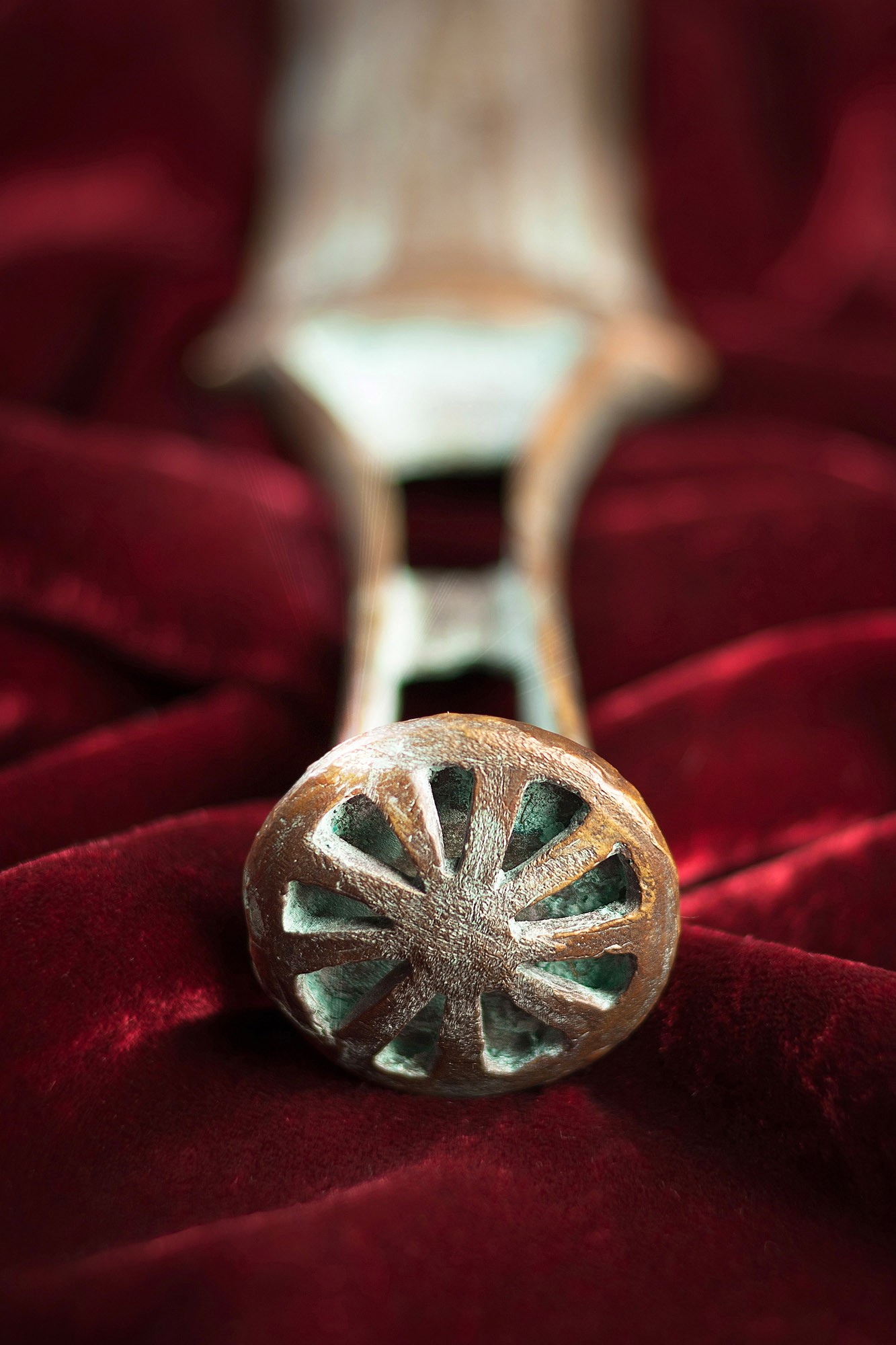
The sword mentioned above is one of the longest swords found in Armenia. The blade has got four edges which start from ricasso and end at the blade. The ricasso has got a horizontal groove. It is decorative and nonfunctional. The hilt has three thin bronze plates, one at the ricasso and one at the knob, and the other one is in the middle. The sides of the hilt are slightly bent so that they could attach the plates, possibly made of wood. 9 lines are diverging outwardly from the center of the knob, forming an original tracery, which in its turn consists of 9 triangles directed to outer side with their bases.
The present territory of Armenia in the XIII cent. BC was the part of the country called Nairi, which was known from the Assyrian cuneiforms. Later, since IX cent. BC, it became known as Etiuni.
In IX – VIII cent. BC Etiuni became a part of The Urartu State. Ancient Armenian soldiers fought against their enemies, mainly Hittites, Mitanni, and Assyrians, armed with swords, including such models as the original of the Sword TS001.
PhD in History, Prof S.G. Hamayakyan