However, since the end of the IX cent. BC the situation on the Armenian Plateau has been changed radically. During that period the king-reformer Ishpuini, who was ruling in The Van Kingdom, rearmed his soldiers with iron weapons. As a result, gradually, the bronze daggers and swords fell out of use in the distant regions of the highlands too and now can only be occasionally found in burial places of the VII-VI cent. BC.
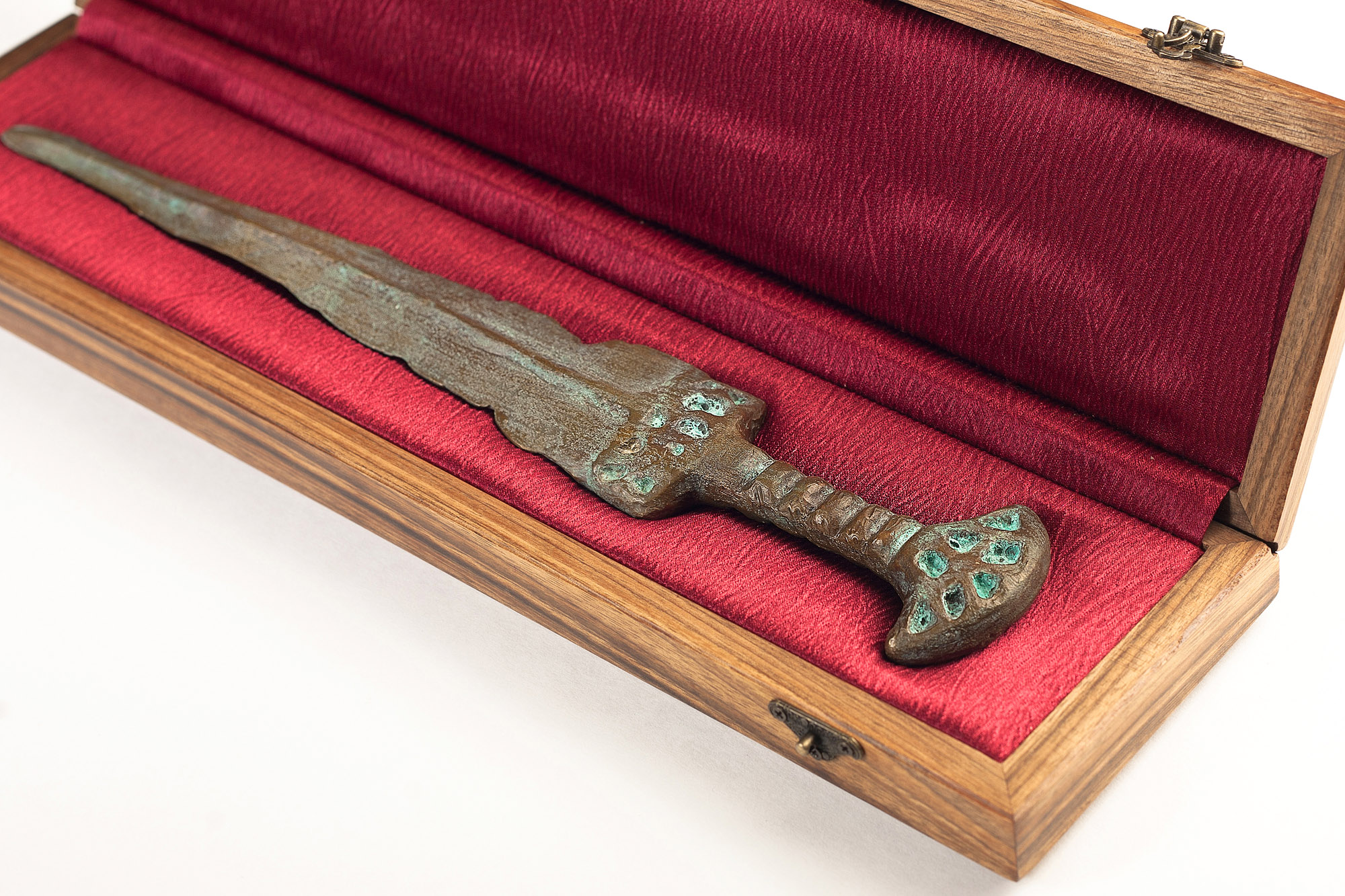
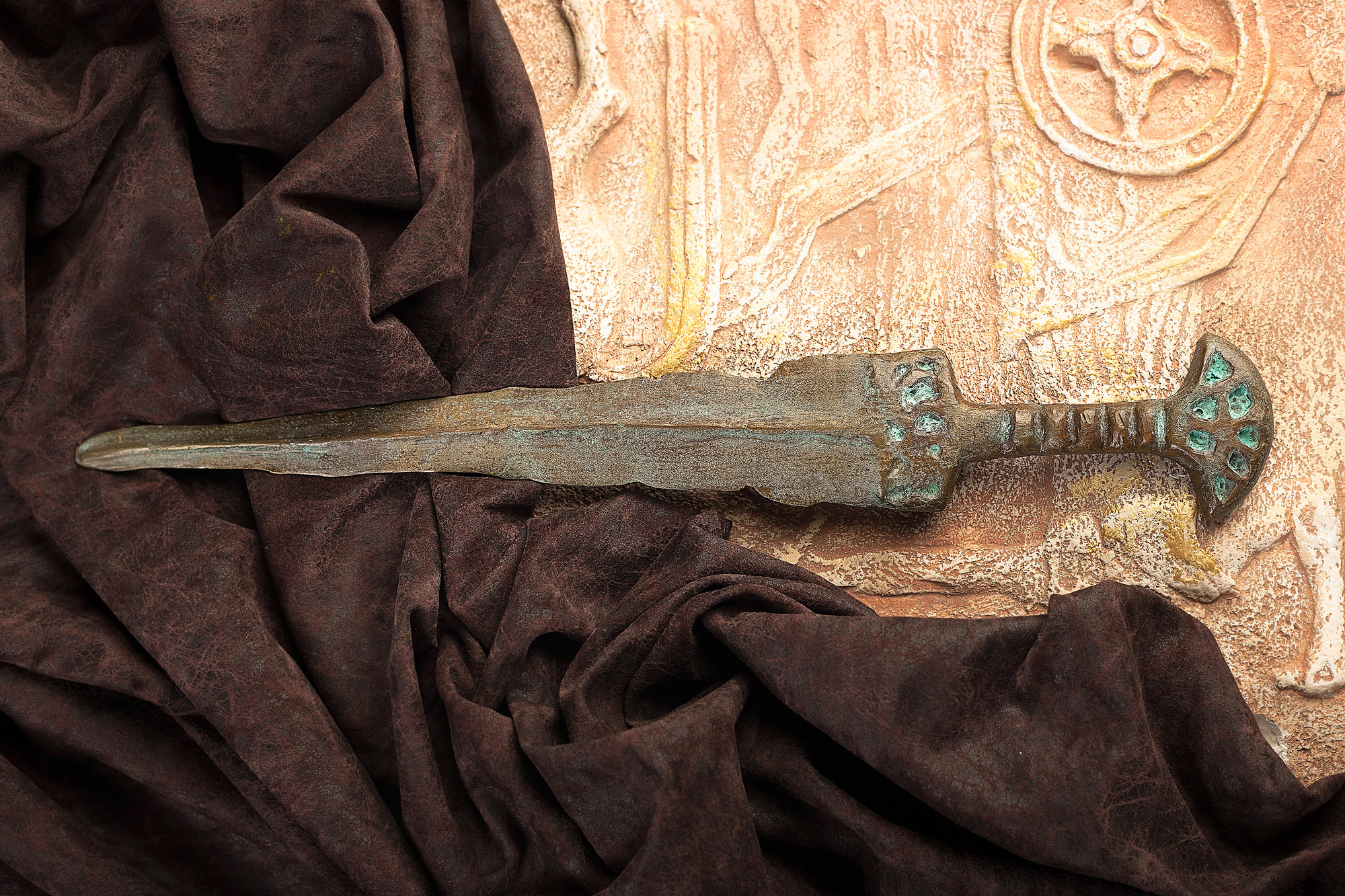
Bronze daggers found in Armenia are divided into seven types and many subtypes. Dagger TD004 belongs to the seventh type. Daggers of this type appear in Armenia since the VIII cent. B.C. and in the specific literature are called Lalvarian daggers. However, they are diverse and hasn’t undergone a strict classification yet.
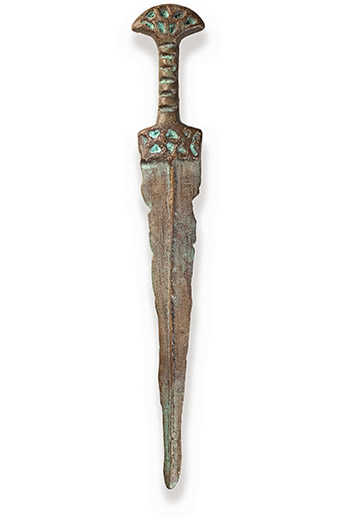
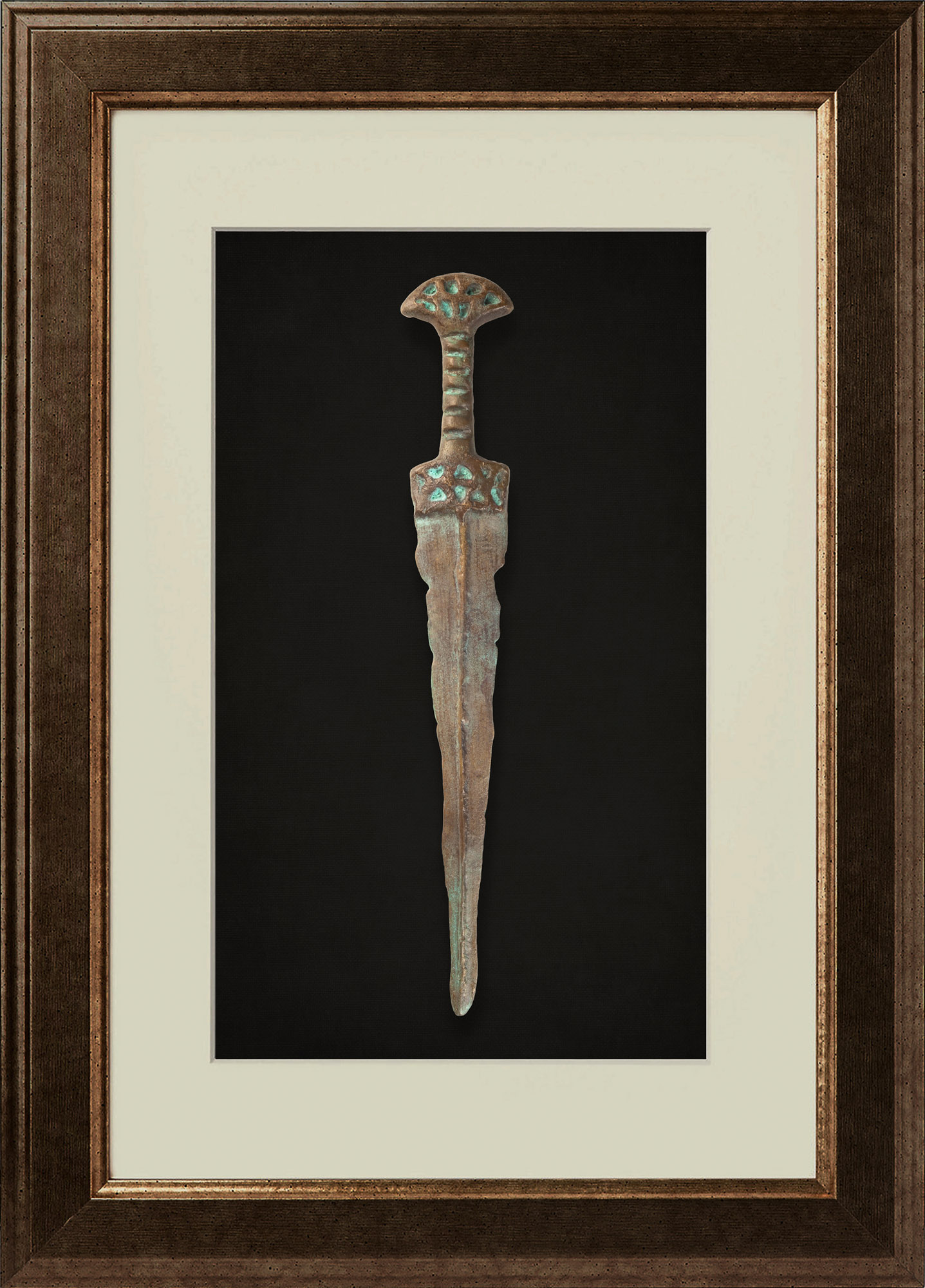
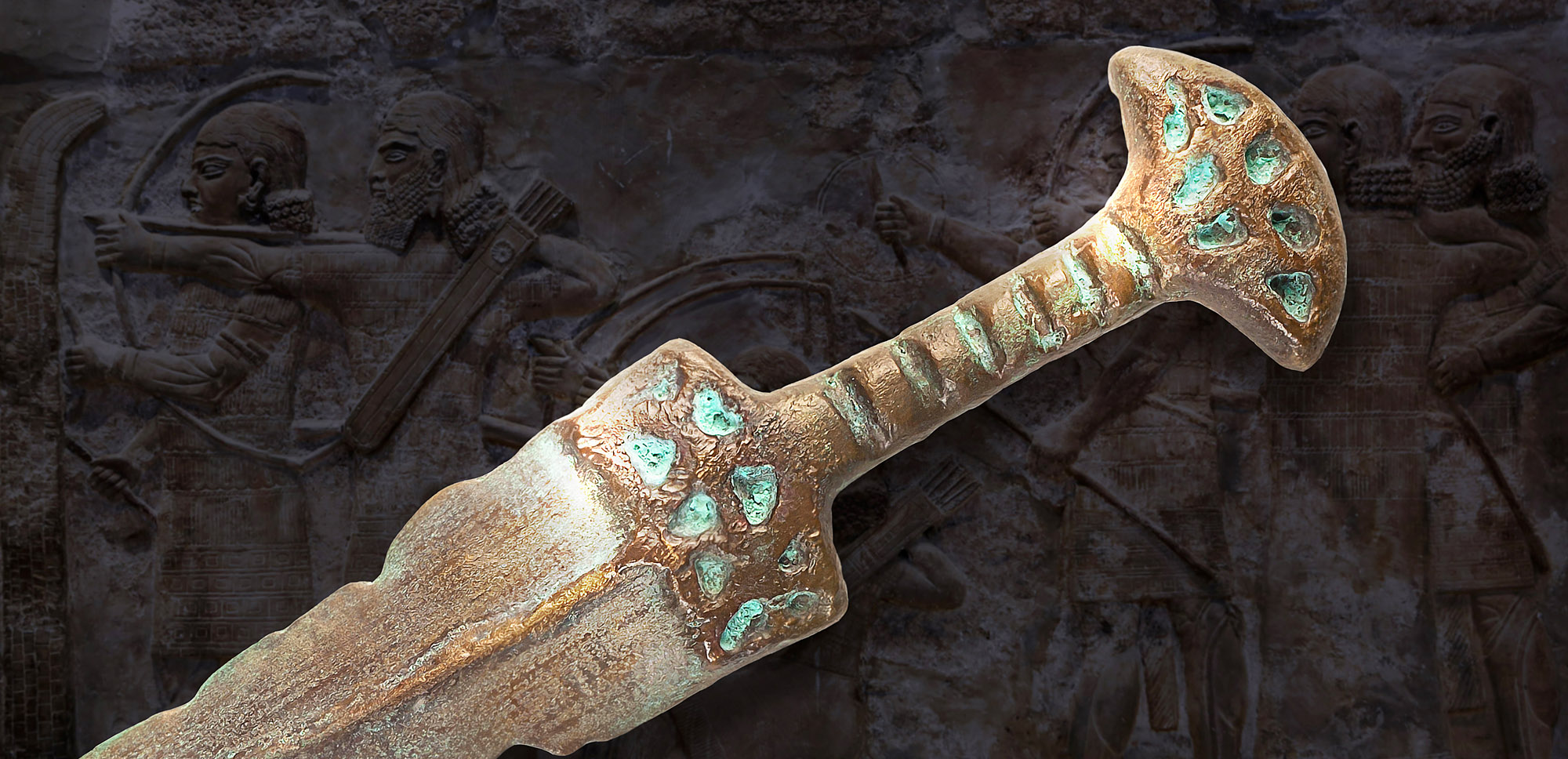
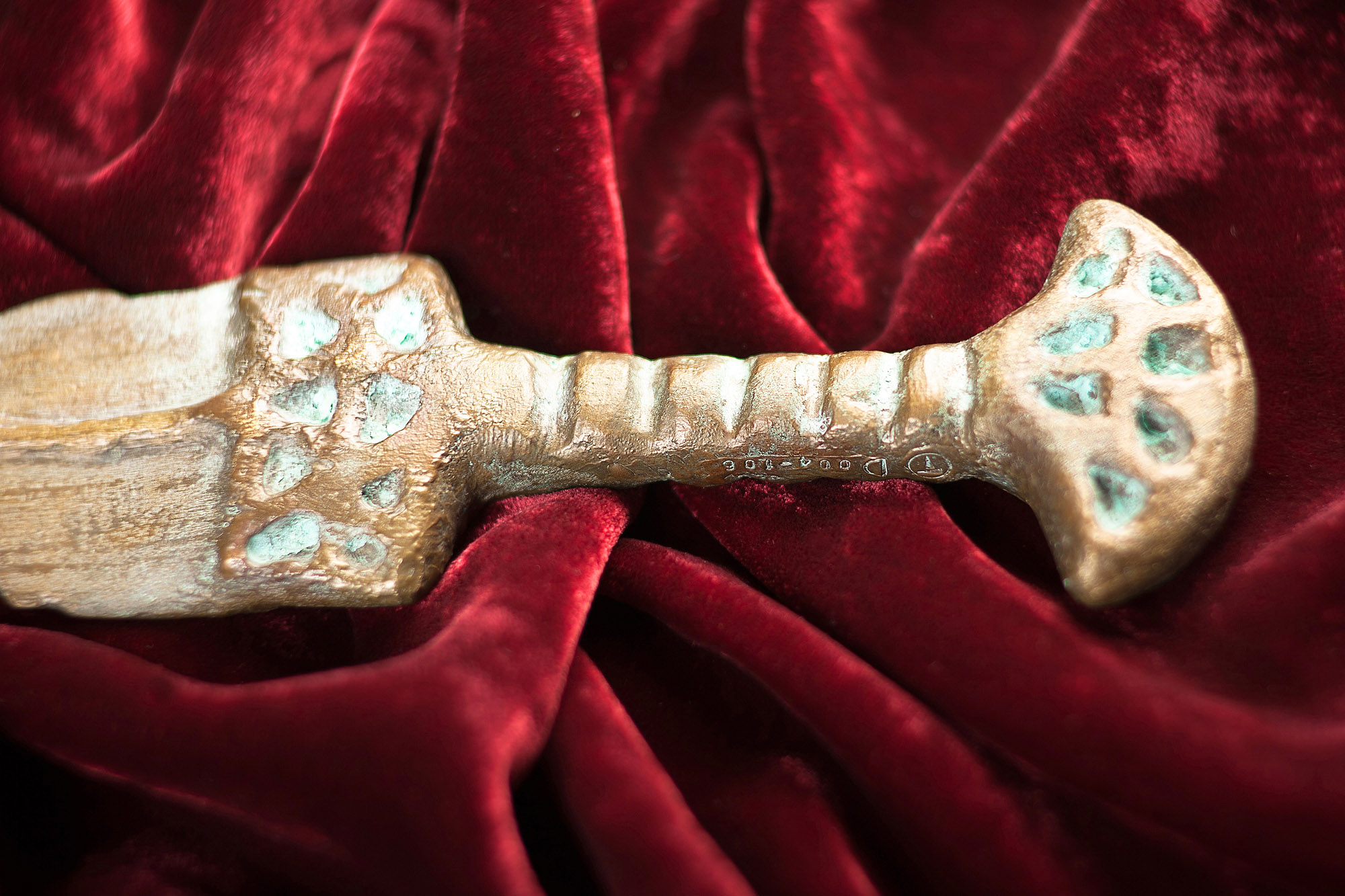
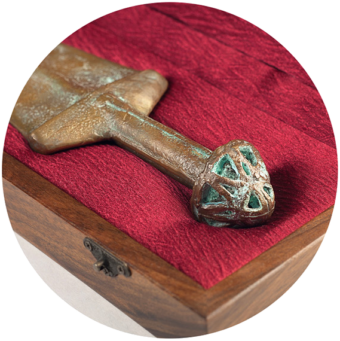
This dagger is distinguished by its fan-shaped knob. The daggers with such hilt are quite rare and known due to the excavations carried out in the territory of Armenia, in Noyemberyan, Tumanyan, Tavush, Astghiblur and Shirakavan regions in particular. They date back to the VIII cent. B.C. and comparatively to rather later periods.
The knobs and the ricasso of the dagger TD004 are decorated with not perforated triangular and rectangular notches that come closely from both sides, in two rows. The hilt itself is oval in cross-section and has got five horizontally posed embossed “lines.”
The blade of the artifact is worn out in some places as a result of having it used, probably in the course of battles. Smoothly narrowing the blade becomes slightly rounded at the tip. It is equipped with clearly distinguished medial ribs in both sides.
For an integral dagger it has got a nonfunctional ricasso, from which one can conclude that the artifact may be an imitation of Armenian daggers of the composite subtype or could belong to the Assyrian-type of daggers of the VIII-VII cent., which hilts are decorated with the help of protruding disks, the imitation of which we can see on the hilt of the dagger. It is significant that the iron dagger of Assyrian origin with such a bronze hilt is known from Astghadzor repository (the basin of Lake Sevan). It was found in the burial place together with the mace (club) and the snaffle of Assyrian origin. The daggers showed the social position of their owner, the warrior, and were a part of the traditional costume.
During the early Iron Age and Urartu period the modern territory of Armenia was called Etiuni and when the soldiers of that country joined the army of The Van Kingdom the Urartu kings were calling them “huradine”. According to the information obtained from the archaeological excavations of Artik burial places, a warrior from Etiuni, in addition to a dagger, could also carry a spear, an ax, a bow and arrows on the battlefield.
In the VIII–VII cent. B.C. the people of Etiuni fought against the armies of the Cimmerians, the Scythians, and the Medes with the help of these weapons.
PhD in History, Prof S.G. Hamayakyan